Mt. Hood, Oregon
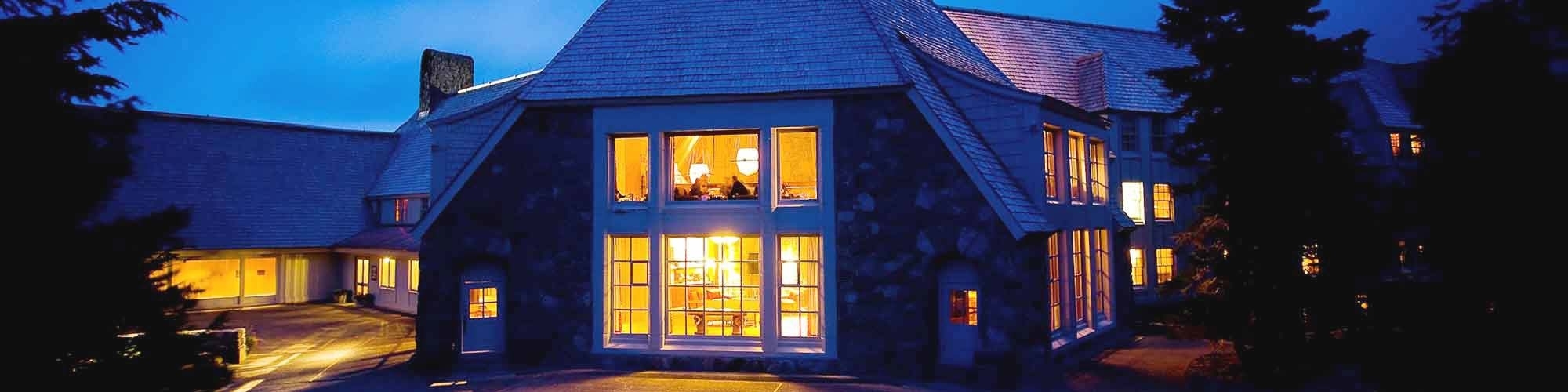
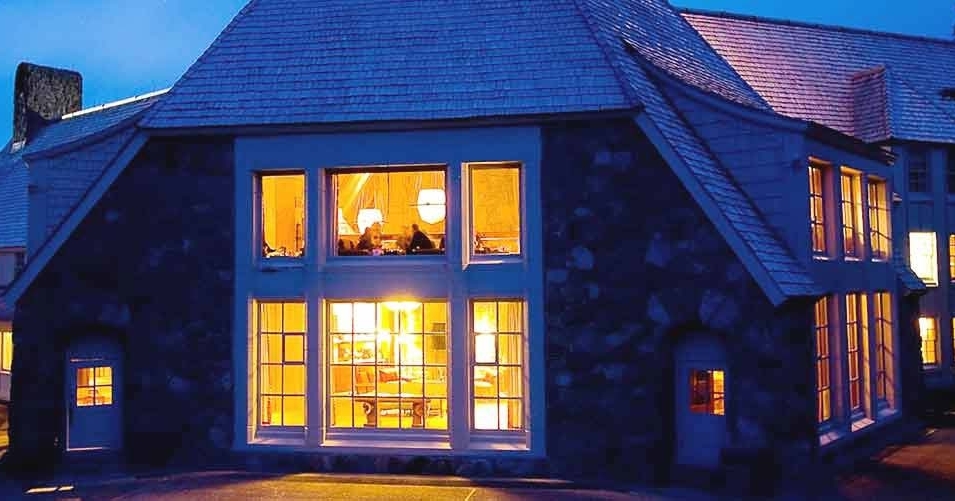
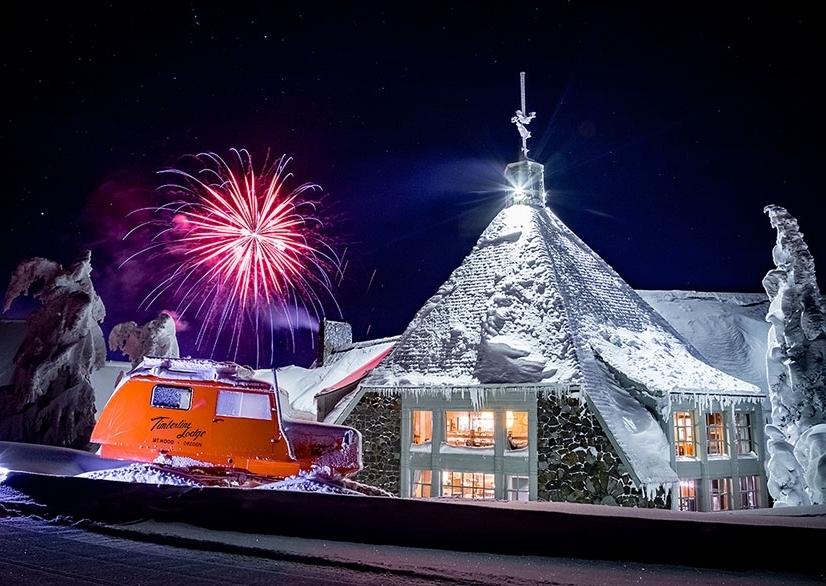
Built in 1937, Timberline Lodge has always been a grand refuge for visitors wanting to experience the magnificent and expansive high-alpine environment of Mt. Hood. A night (or a few) enjoyed in the comfort and warmth of the Lodge is like stepping back into simpler times, yet with all modern conveniences discreetly available.
Book any room for a midweek stay in August and receive a $75 credit towards your Timberline restaurant purchase.
Available through August 31, 2025
Offer valid midweek Sunday through Thursday nights. To receive credit, please charge food and beverage to your room and we will remove it at checkout. Our added-value packages may not be combined with any other promotion or discount. New reservations only. Subject to availability.
BOOKING CODE: CRED75
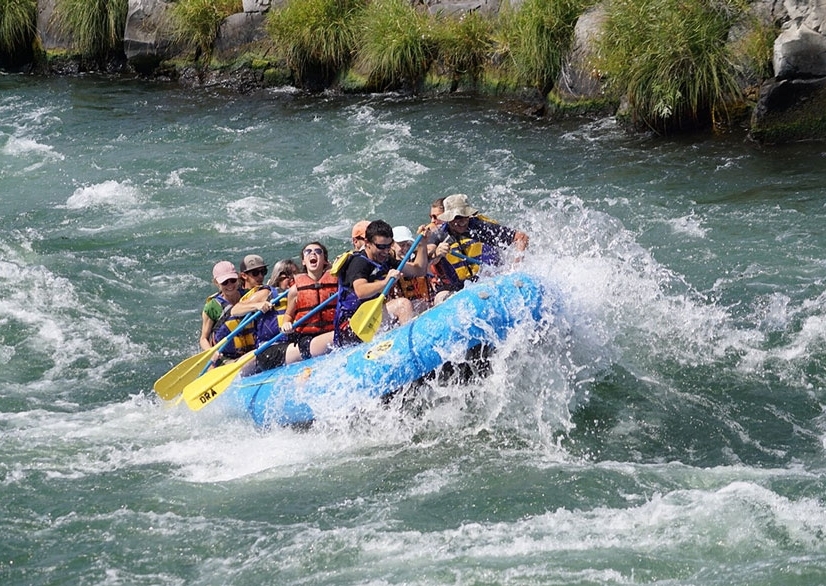
Experience the thrill of Deschutes whitewater with a super fun 3.5 hour raft trip. Book a room this summer and add a Deschutes River Adventures rafting trip for the fam! The half-day adventure is available daily at 9am and 1:30pm with a four-person minimum
Available through September 15, 2025
RAFTING ADD-ON
Mondays - Fridays $70/adult $65/kids 6-14
Weekends $85/adults $80 kids 6-14
Minimum four people required. Standard 7-day cancellation policy applies to receive a full refund. Cancellations or no shows within 24 hours of the reservation will forfeit 100% of the cost of the rafting trip.
CALL 503-272-3410 TO MAKE RAFTING RESERVATIONS
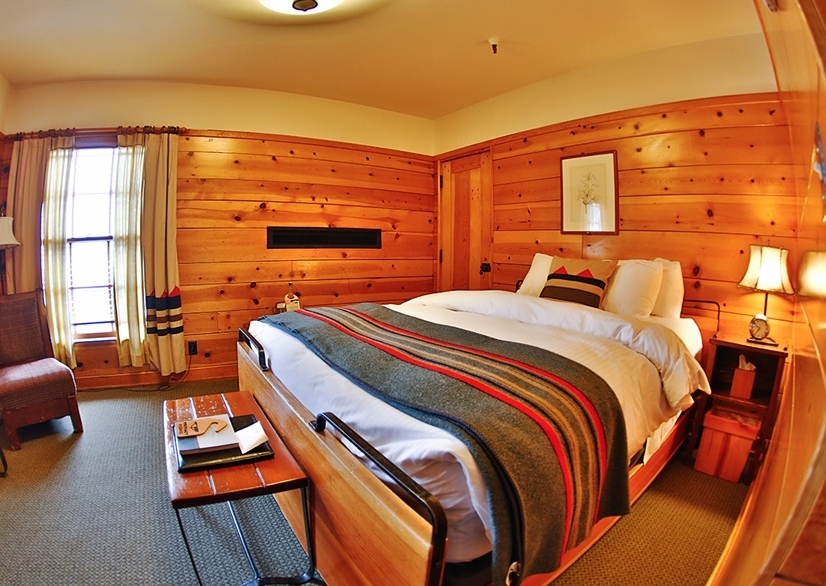
Stay midweek in a queen room and receive a gift certificate for a free future night's stay—redeem it anytime within a year, or pass it along as a gift.
Available through Sept. 1 - 30, 2025
Offer valid midweek Sunday through Thursday nights. Our added-value packages may not be combined with any other promotion or discount. New reservations only. Subject to availability. No substitutions.
BOOKING CODE: CERT
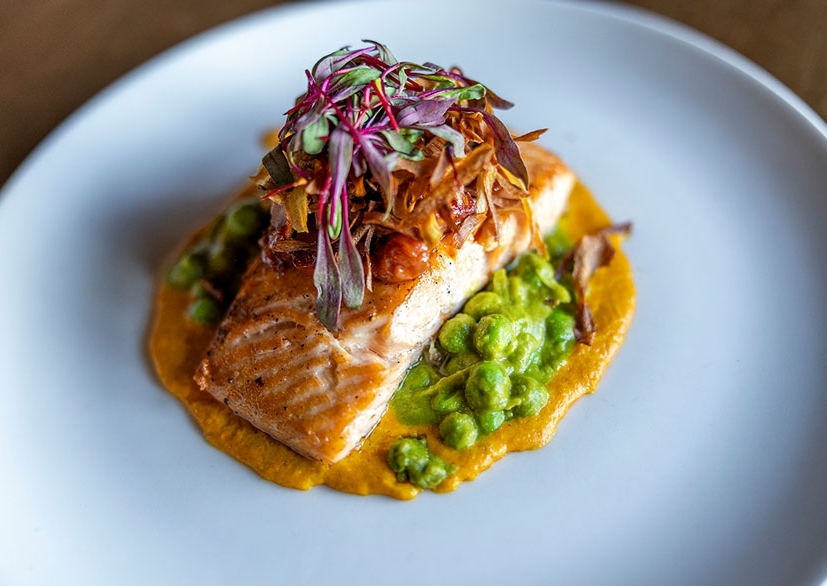
Celebrate the flavors of the Pacific NW when you dine in the Cascade Dining Room. Stay the night midweek and receive a $50 meal credit for your meal.
Available through Sept. 1 - Oct. 30, 2025
Offer valid midweek Sunday through Thursday nights. To receive credit, please charge food and beverage to your room and we will remove it at checkout. Our added-value packages may not be combined with any other promotion or discount. New reservations only. Subject to availability.
BOOKING CODE: CHEF
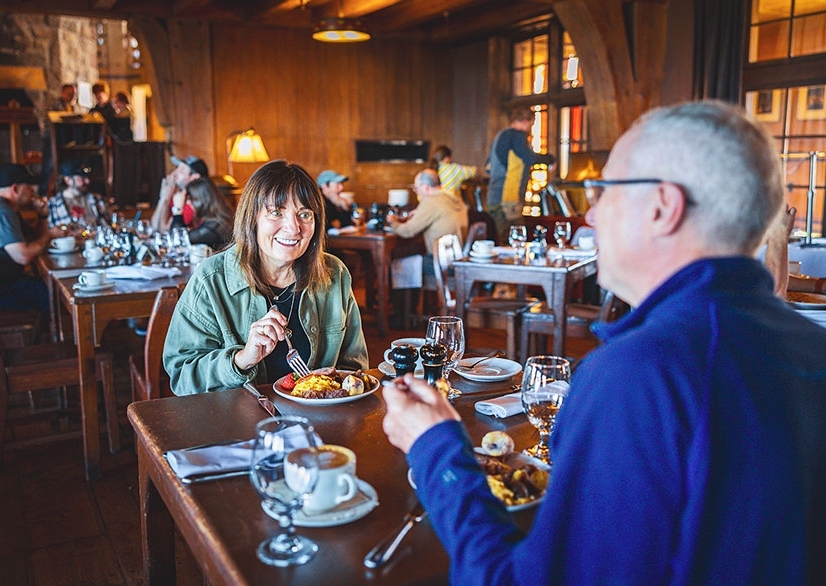
Stay in a queen room for $235 Sundays – Thursdays and enjoy complimentary breakfast for two in the Cascade Dining Room.
Available through Sept. 1 - Oct. 30, 2025
Offer valid midweek Sunday through Thursday nights. Our added-value packages may not be combined with any other promotion or discount. New reservations only. Subject to availability. No substitutions.
BOOKING CODE: B235
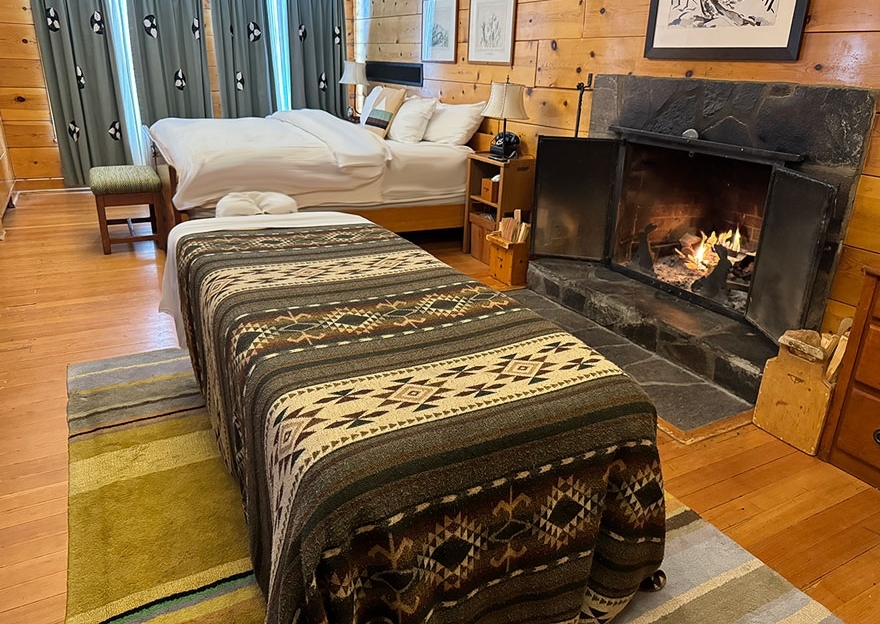
Enjoy a 90-minute apres-ski massage in the privacy of your king fireplace or corner room.
Available through December 31, 2025
This package is available for king and corner style rooms, any day of the week, based on the masseuse's availability. Please book at least 72 hours in advance. Rate includes gratuity. Since check in time is 4pm, massages will be scheduled for the evening on the date booked. Certain dates excluded. Standard cancellation policy applies.Cancellations or no shows within 24 hours of the reservation will forfeit 100% of the cost of the massage.
BOOKING CODE: MASSAGE
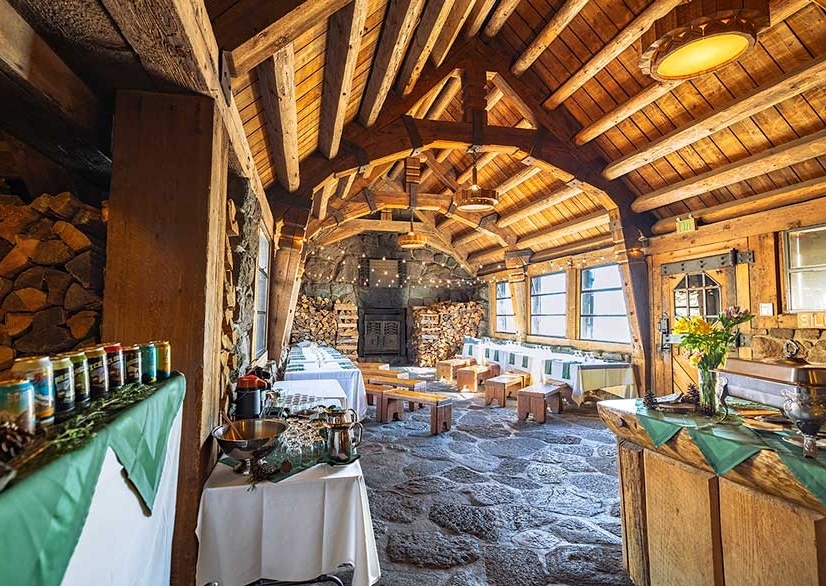
Make Silcox Hut your summer basecamp. Planning a group getaway? Book an overnight stay at Silcox Hut for any date between June and September and take advantage of our exclusive summer specials:
Ski – Save $50 on summer lift tickets.
Bike – Overnight rate includes lift tickets to the Timberline Bike Park.
Golf – Get $50 per person toward a round at Mt. Hood Oregon Resort.
Hike & Swim – Enjoy a guided morning hike, afternoon pool time, and an evening at Silcox.
CALL 503-272-3251 TO MAKE SILCOX HUT RESERVATIONS
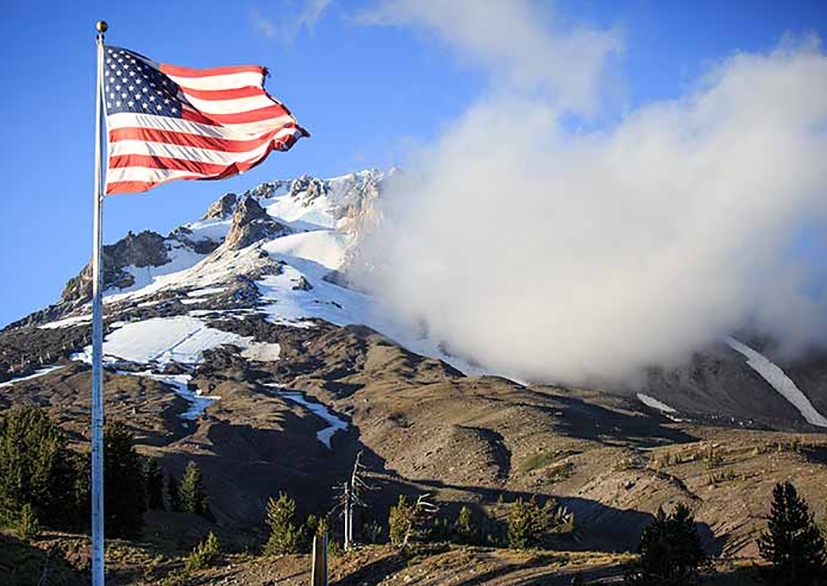
Active military and veterans get 15% off all room types any time of year. Present your military ID at check-in to receive the discount. Thank you for your service!
This is a discounted rate of 15% off standard pricing on all Timberline hotel rooms and condos. This discounted rate is available to active military and veterans. No blackout dates. Subject to availability. May not be combined with any other offer or promotion. Military ID must be presented at check in to receive the discount.
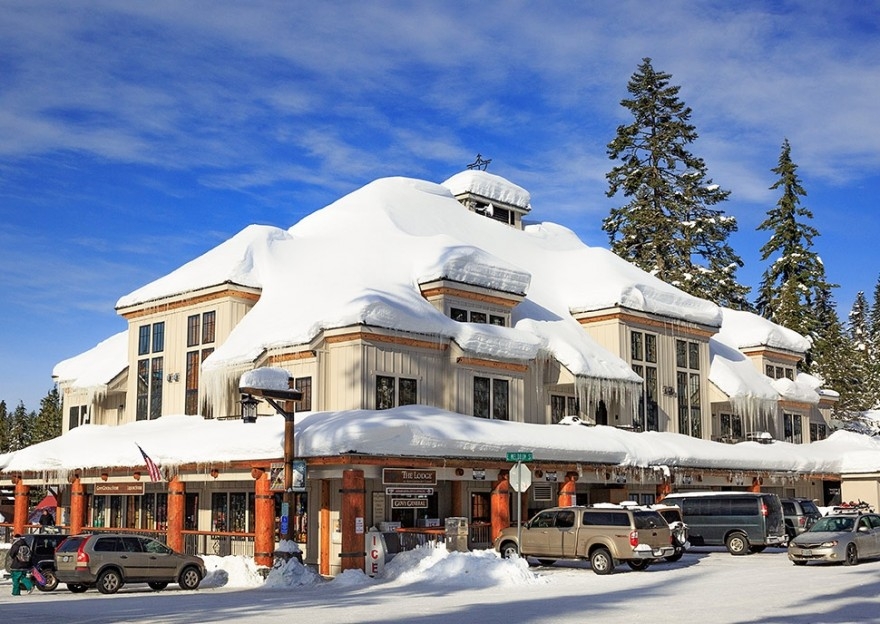
Looking for roomier accommodations with more amenities? Book one of our eight condos in Government Camp for your next ski and snowboarding vacation. The condos come fully-equipped with full-size kitchens, living rooms with fireplaces, and sleeping quarters for 4-10 people. Condo guests also get access to the Timberline pool and hot tub and discounts at the historic lodge.
Two night minimum required.
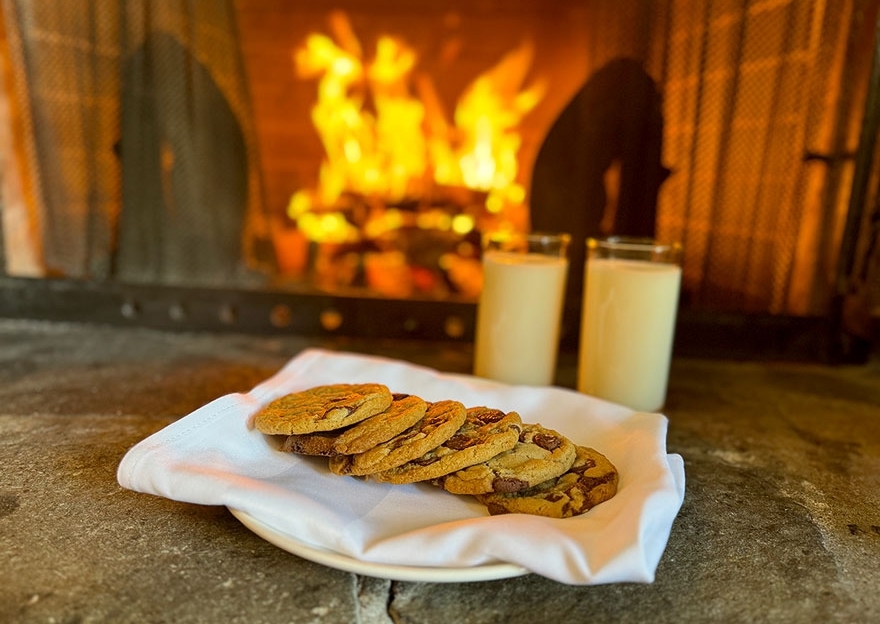
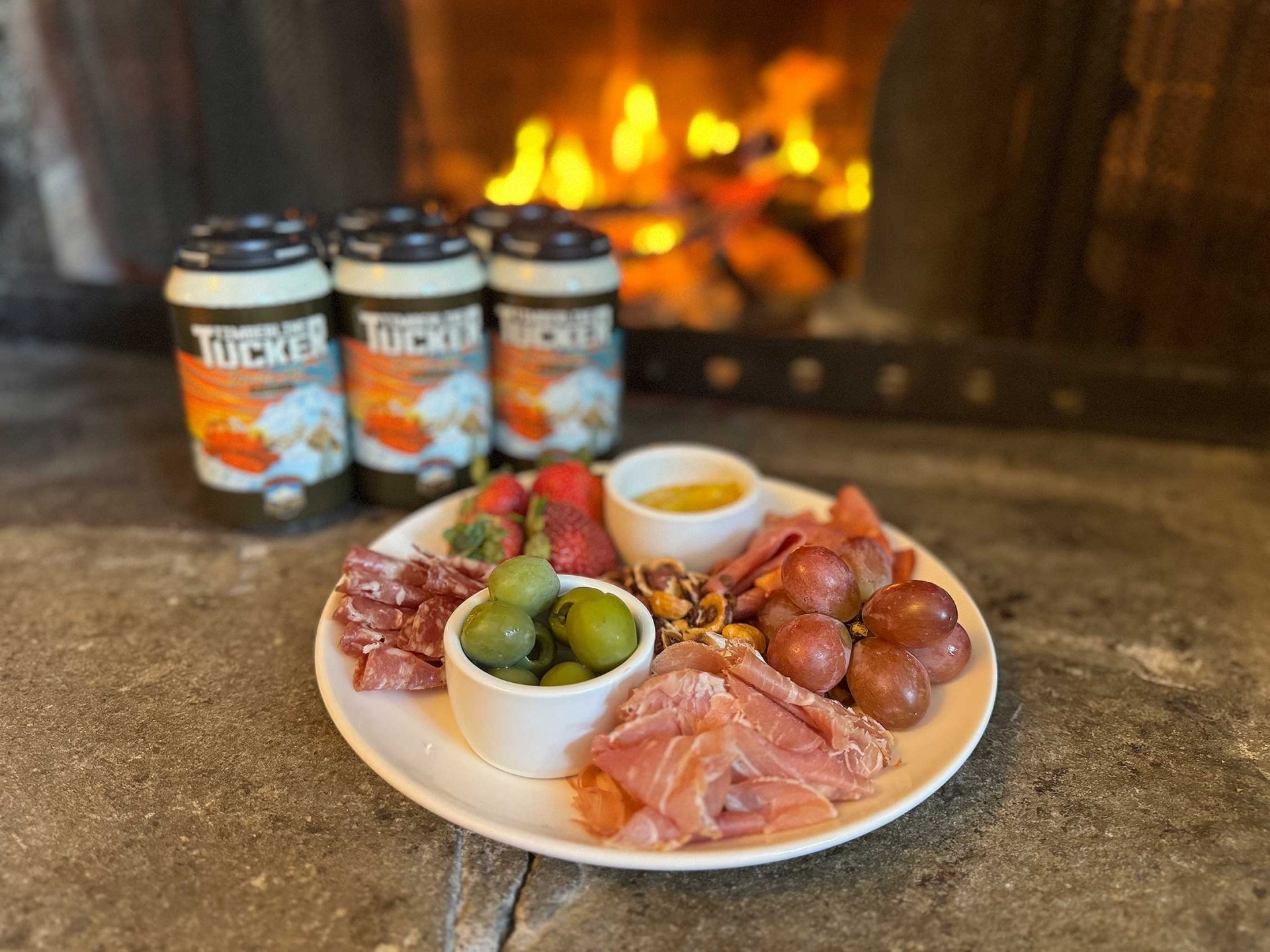
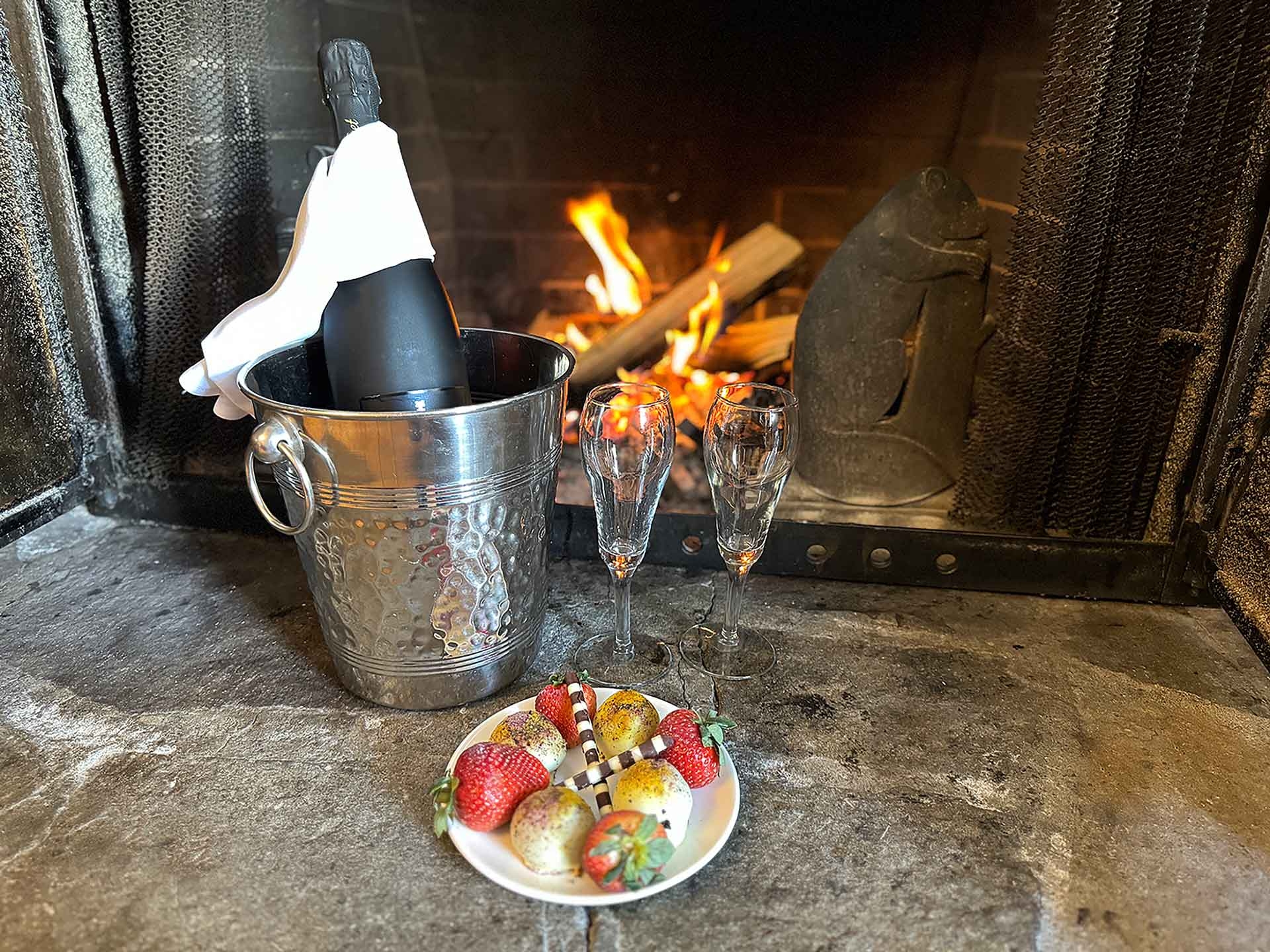
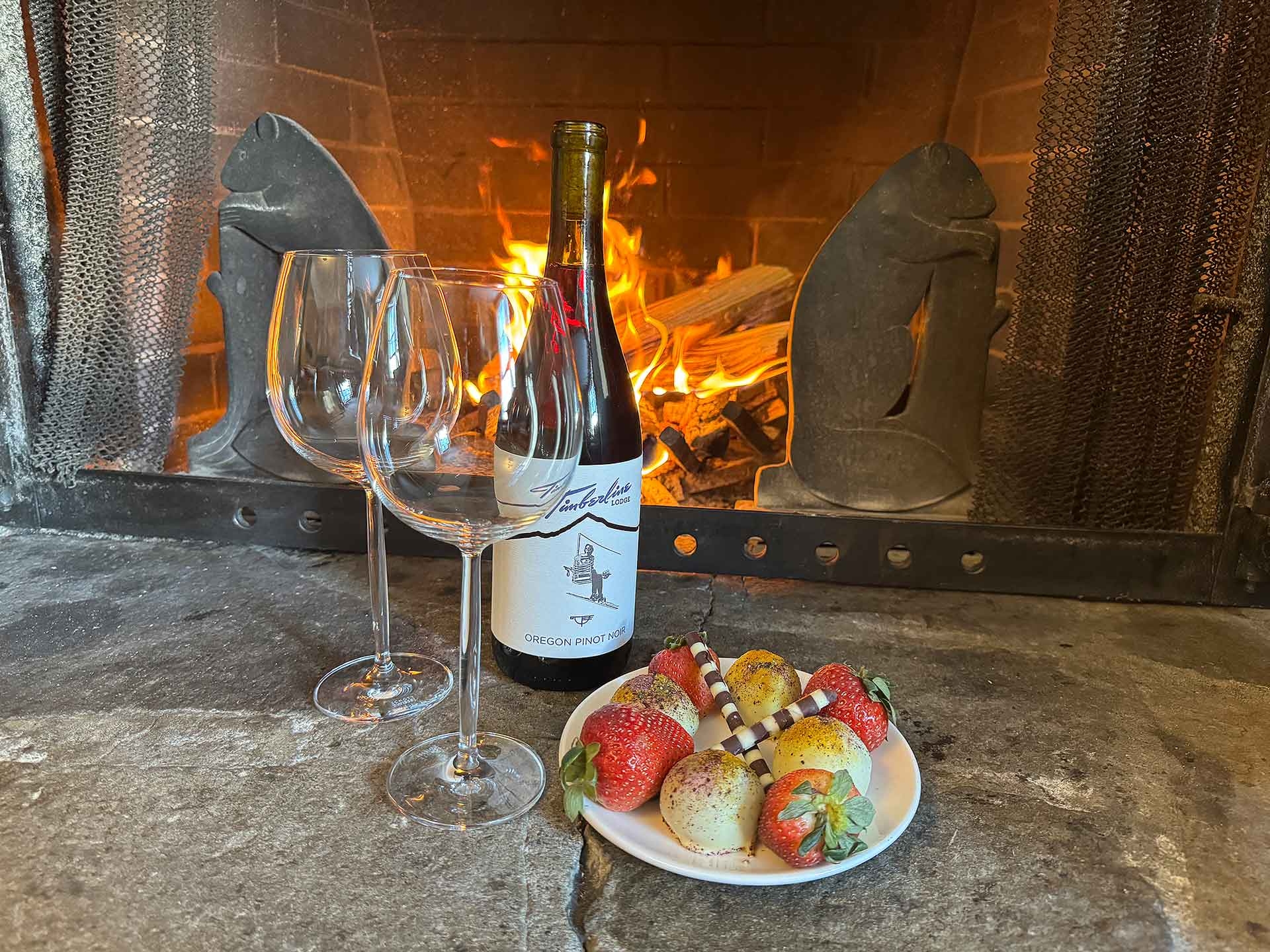
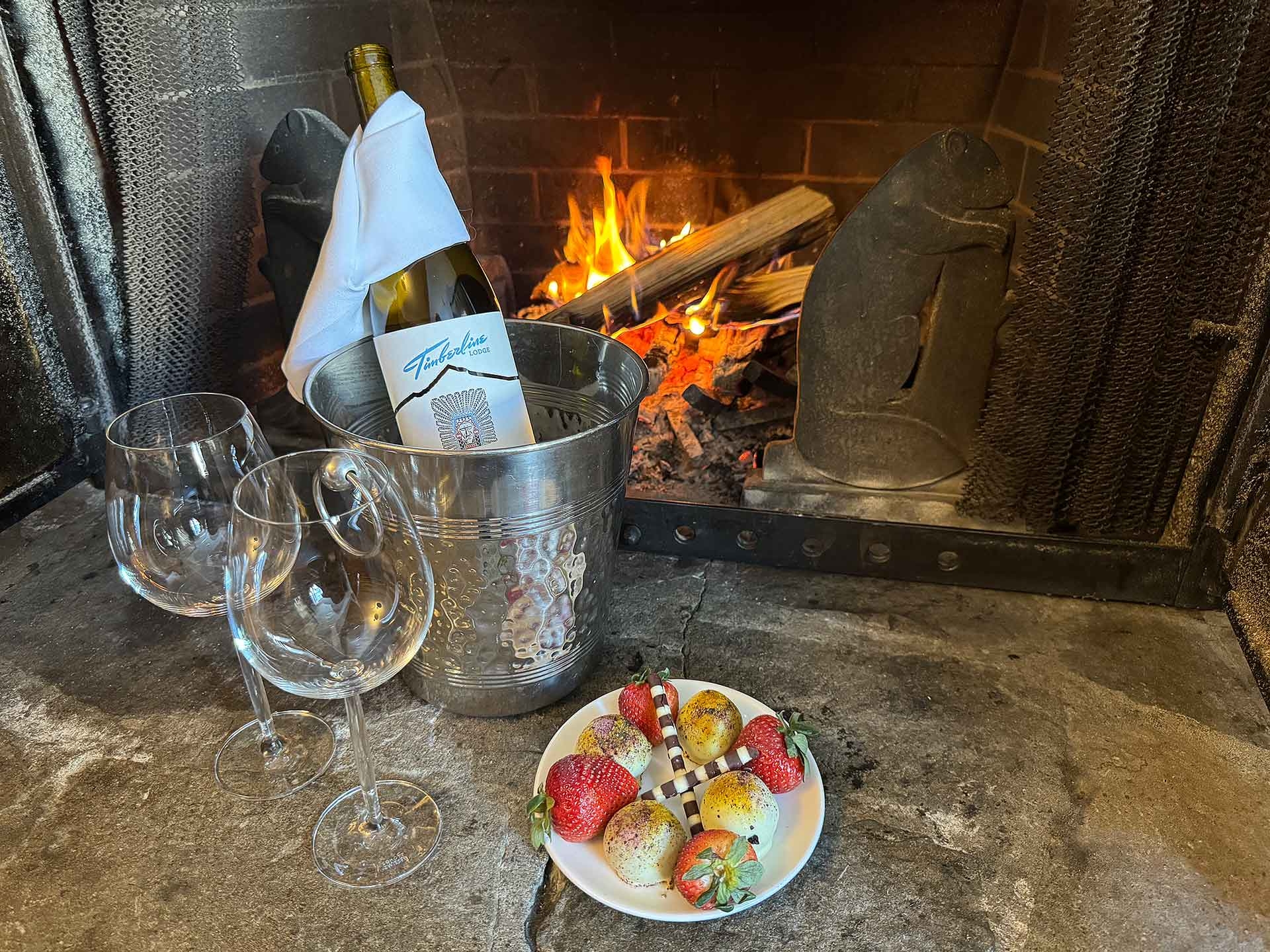
Enhance your Timberline ski package with in-room treats. Order from an à la carte menu of fun and tasty enhancements to make your stay even more enjoyable.
To add enhancement packages to your online reservation, simply select your dates of stay and choose a room. You will then be able to select lodging enhancements. Add one or more to each day of your visit.
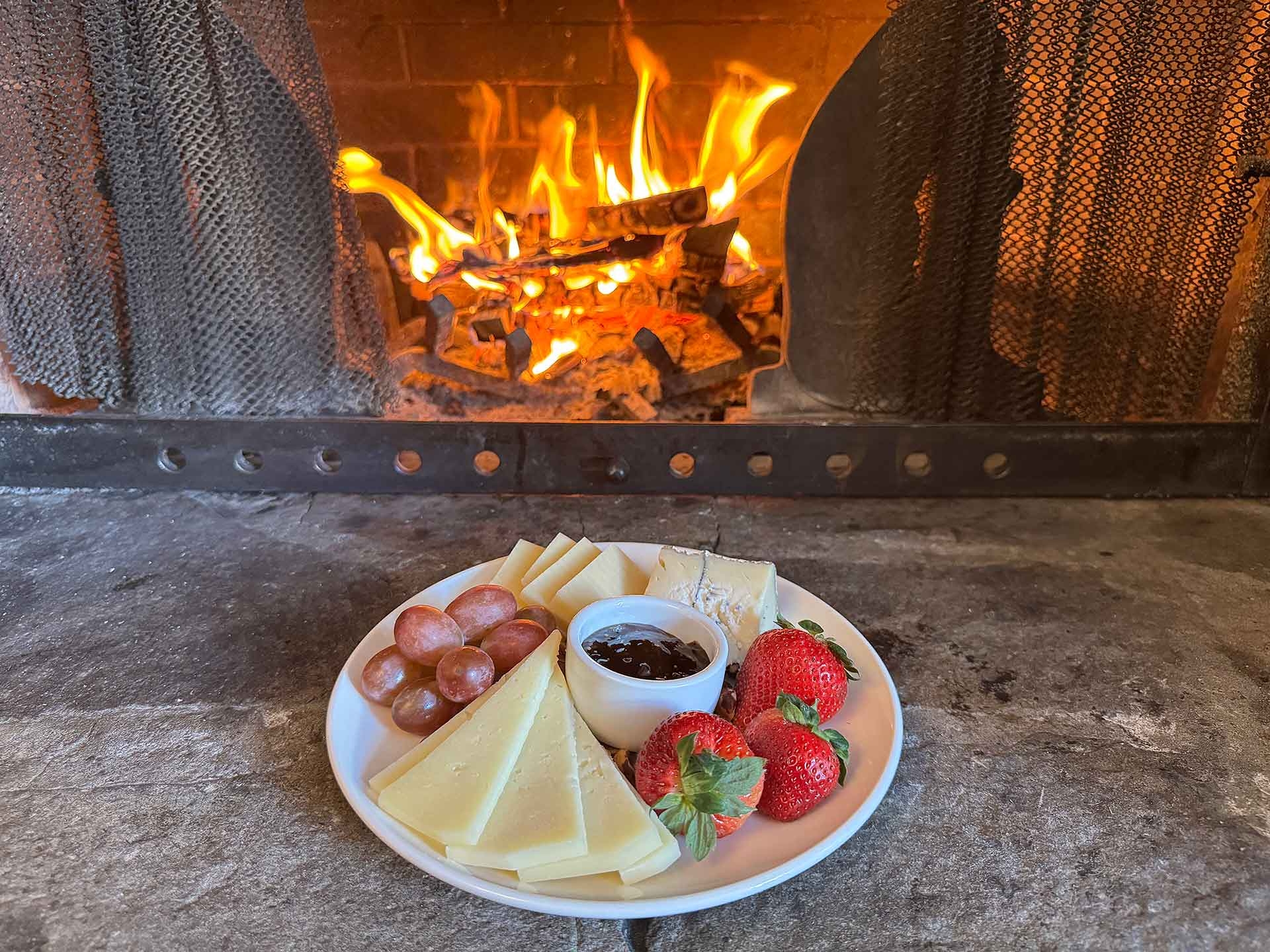
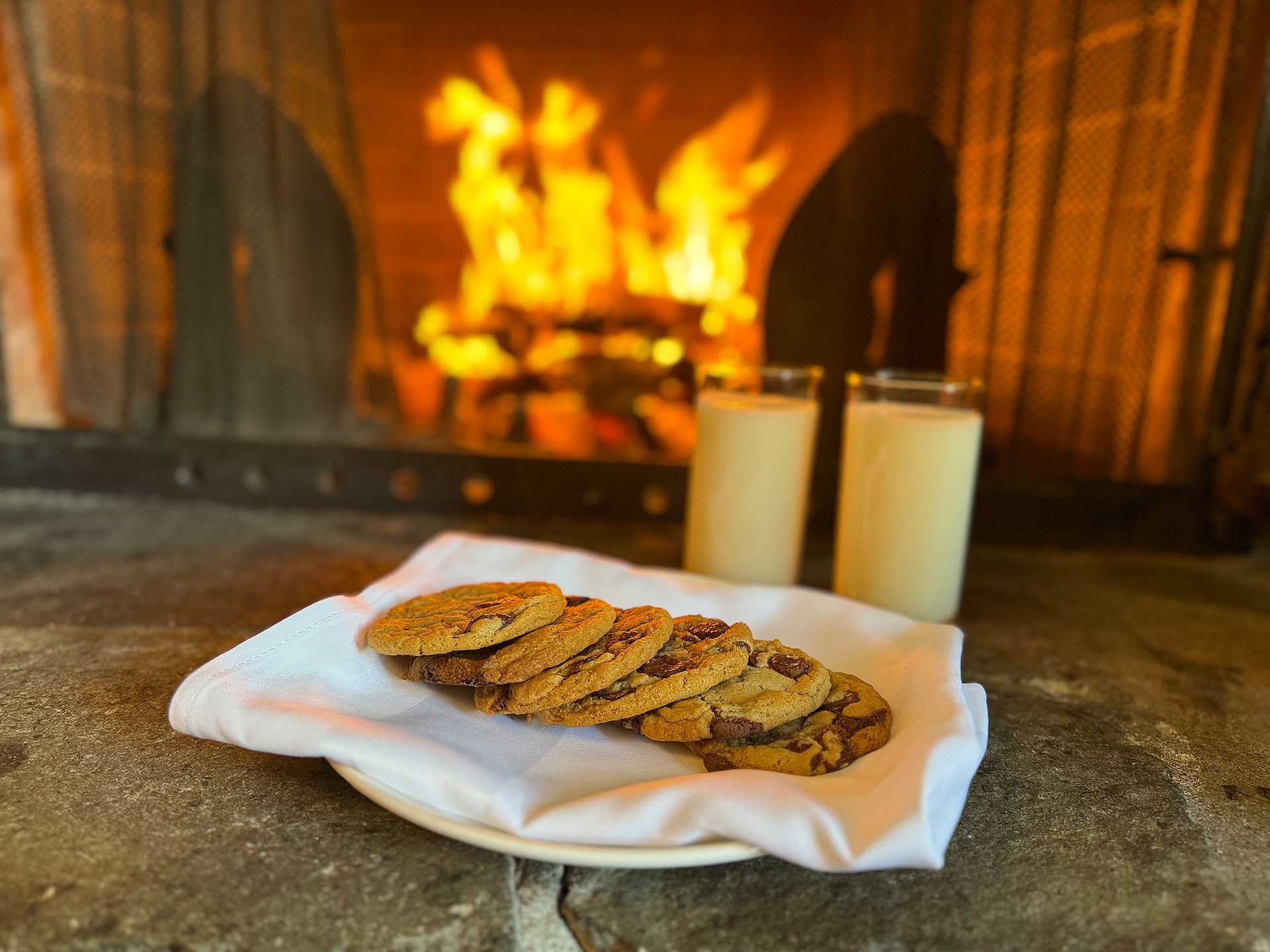
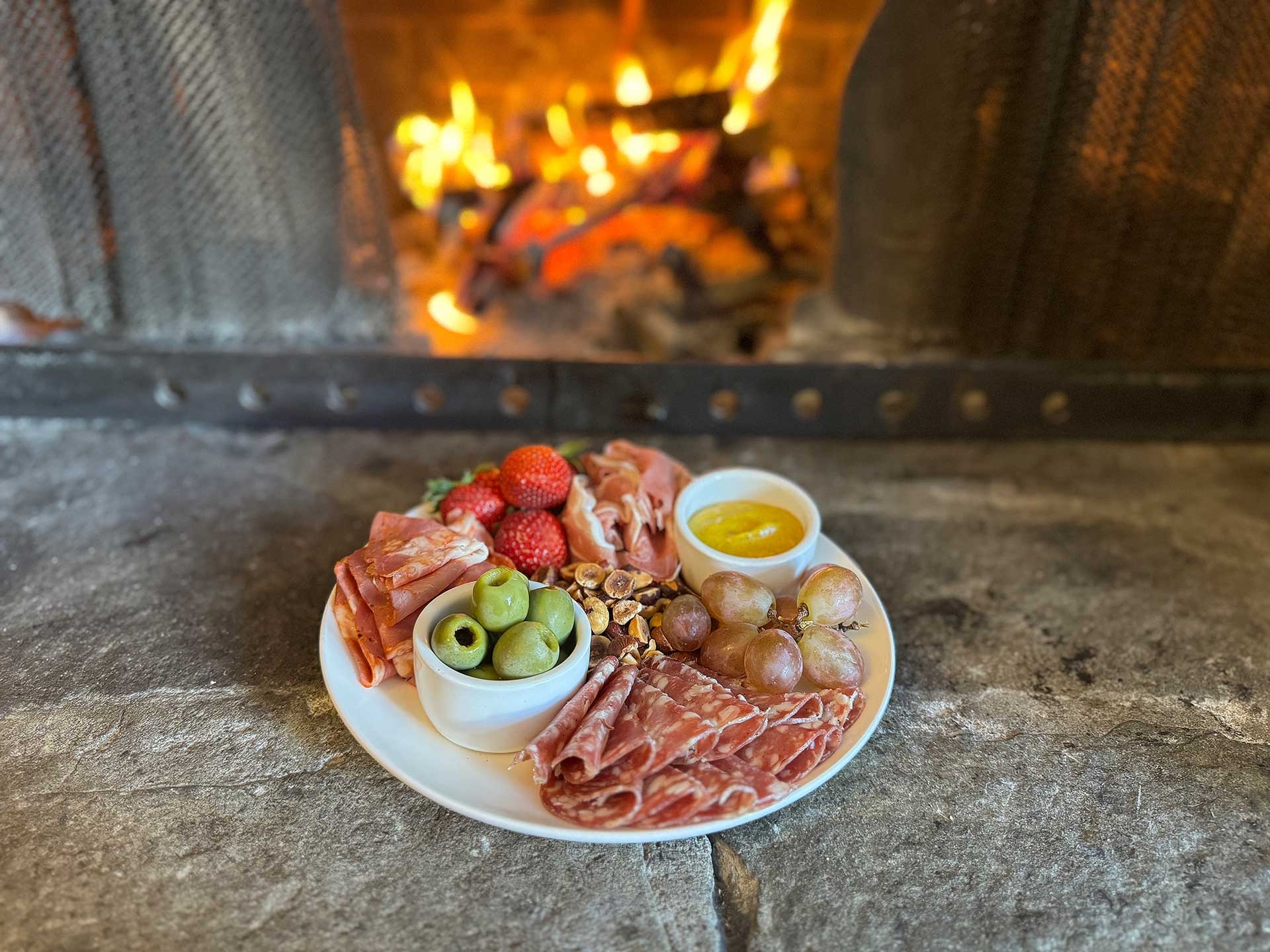
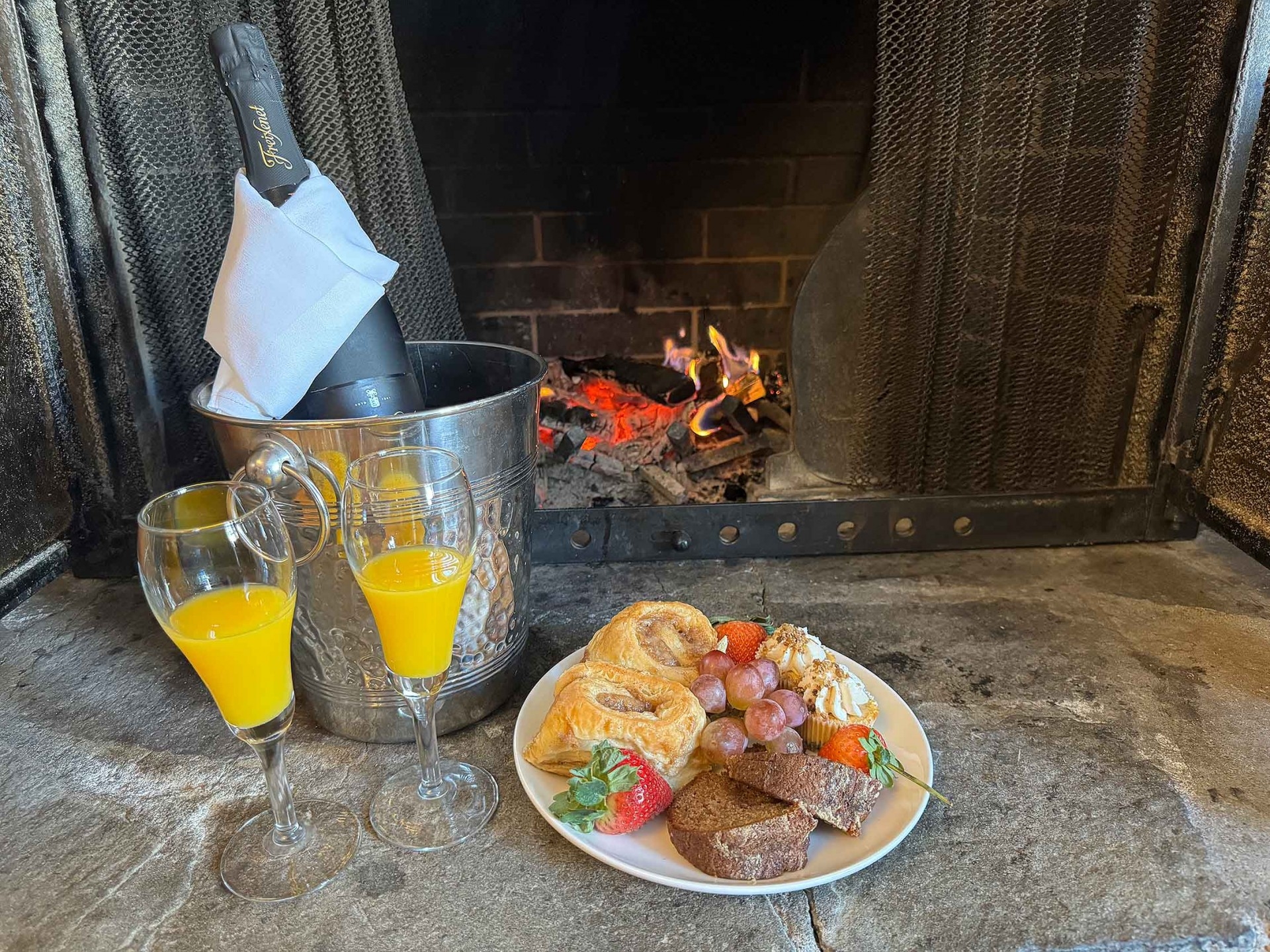
Most of our special packages are not available during the following dates but keep an eye out for last minute deals!
- Summer Break: May 26 - Sept. 1, 2025
- Thanksgiving: Nov. 26 - 28, 2025
- Winter Break: Dec. 20, 2025 - Jan. 2, 2026 (minimum two-night stay)
- MLK Jr. Weekend Sunday: Jan. 18, 2026
- Presidents’ Weekend Sunday: Feb. 15, 2026
- Spring Break: March 22 - 27, 2026
- Memorial Day Sunday: May 24, 2026
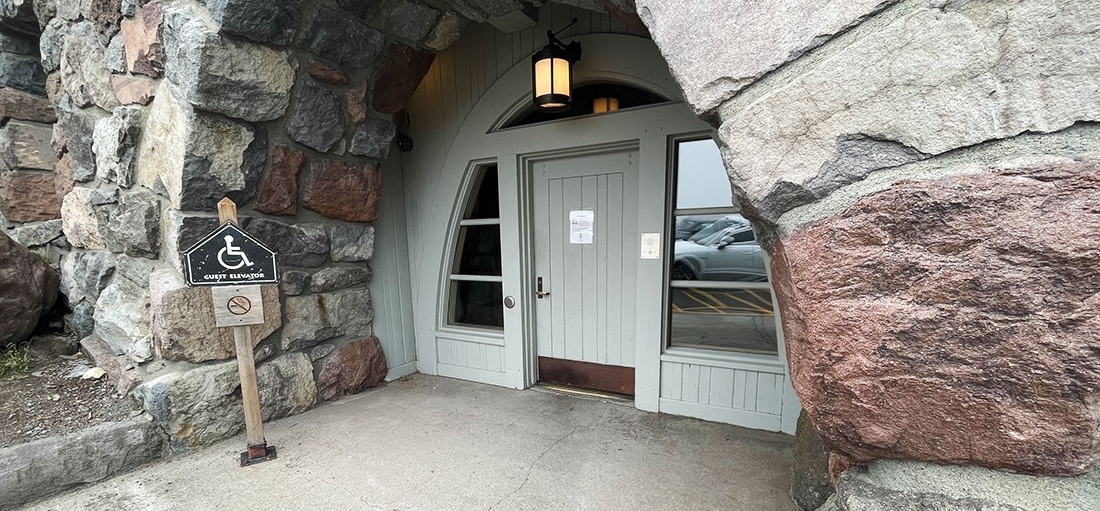
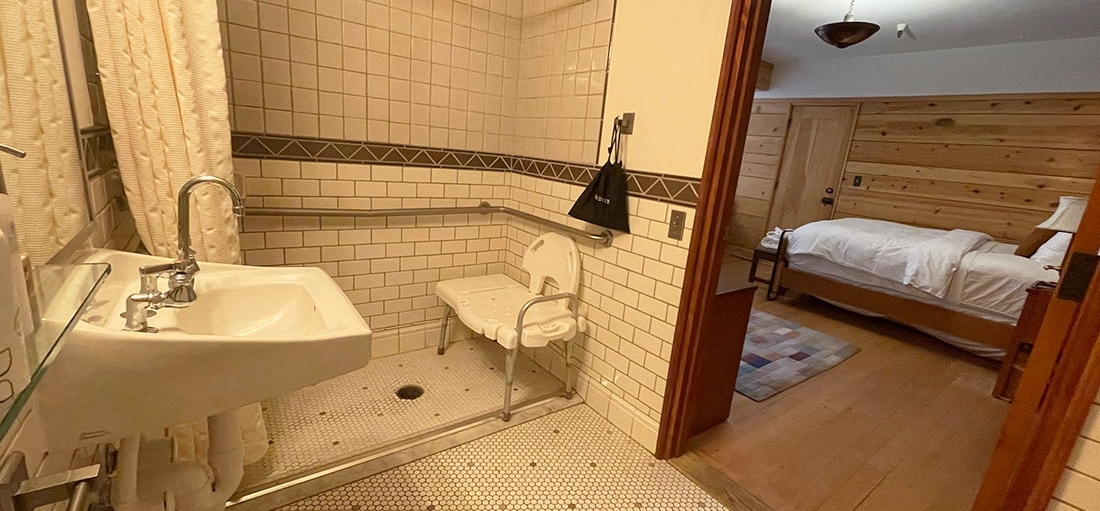
Timberline Lodge is ADA accessible to ensure that everyone has an equal opportunity to experience its splendor. Our ADA entrance is on the east end of the lodge near accessible parking spots. The ADA entrance has press-button powered doors and an elevator to the main floor of the lodge. The heated outdoor pool, hot tub, fitness area, and Ram’s Head Bar have ADA lifts. However the sauna and Blue Ox Bar are not ADA accessible at this time.
ADA GUEST ROOM FEATURES
- Bars in the bathroom to assist mobility
- Roll in shower with handheld showerhead
- Higher vanity in bathroom with roll under sink for wheelchair accessibility
- Wider doorways
- Smoke detectors for guests with hearing impairments available on request
Please call (503) 272-3410 to request an ADA accessible hotel room
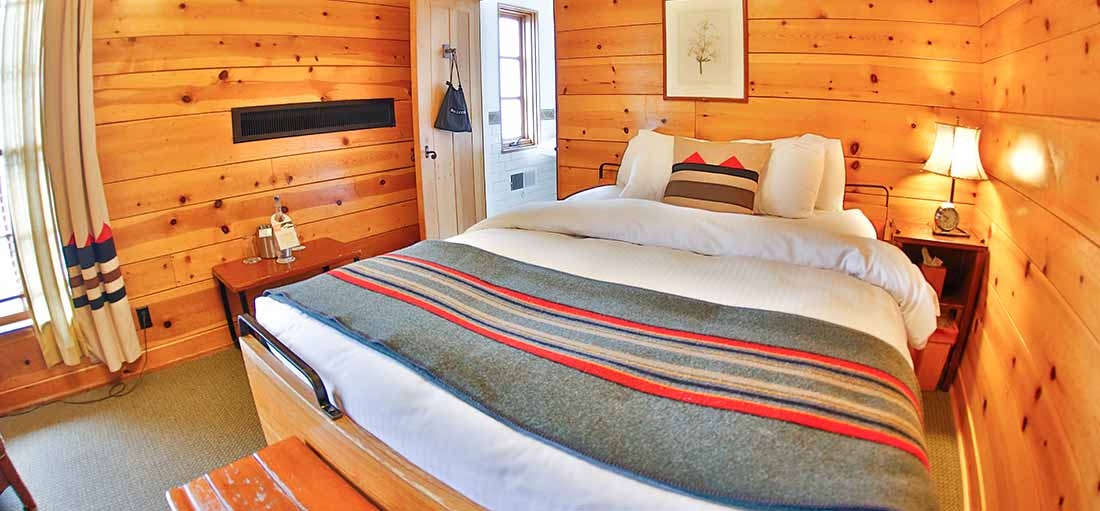
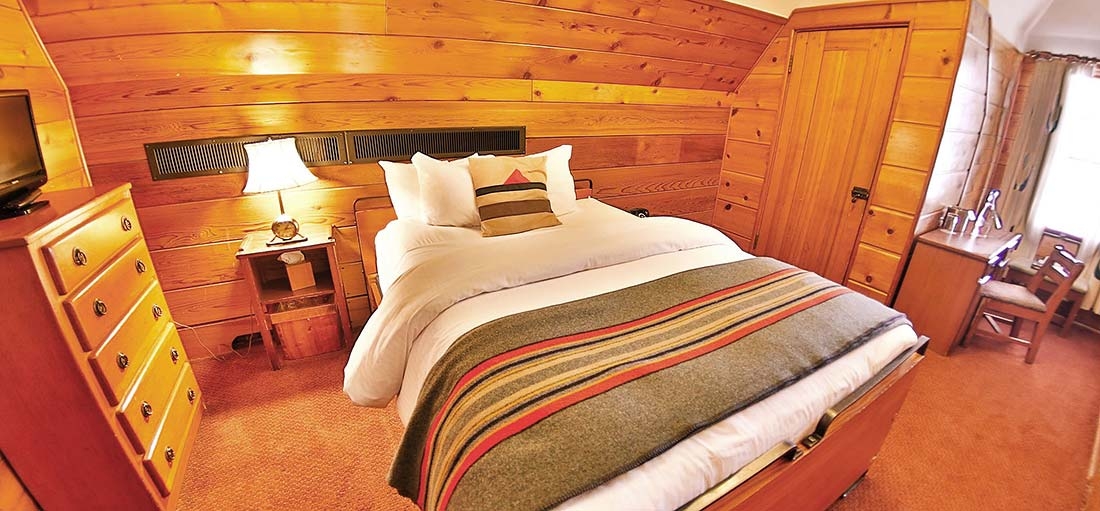
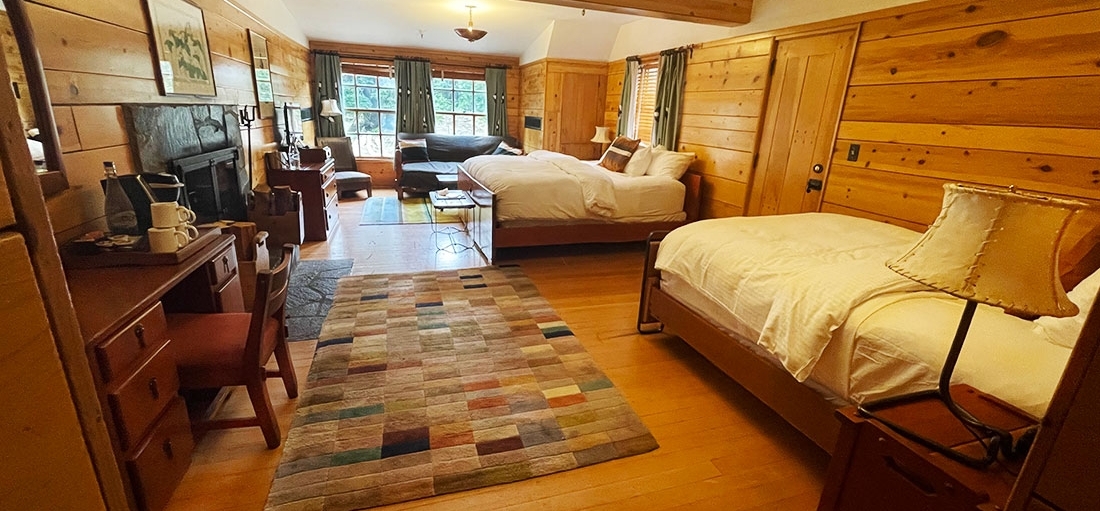
At Timberline, every hotel room is as unique as the alpine landscape. Of the historic lodge's 70 guest rooms, over half are queen or queen-twin rooms. Each intimate room is richly decorated with original artwork and textiles, and sturdy handcrafted furniture.
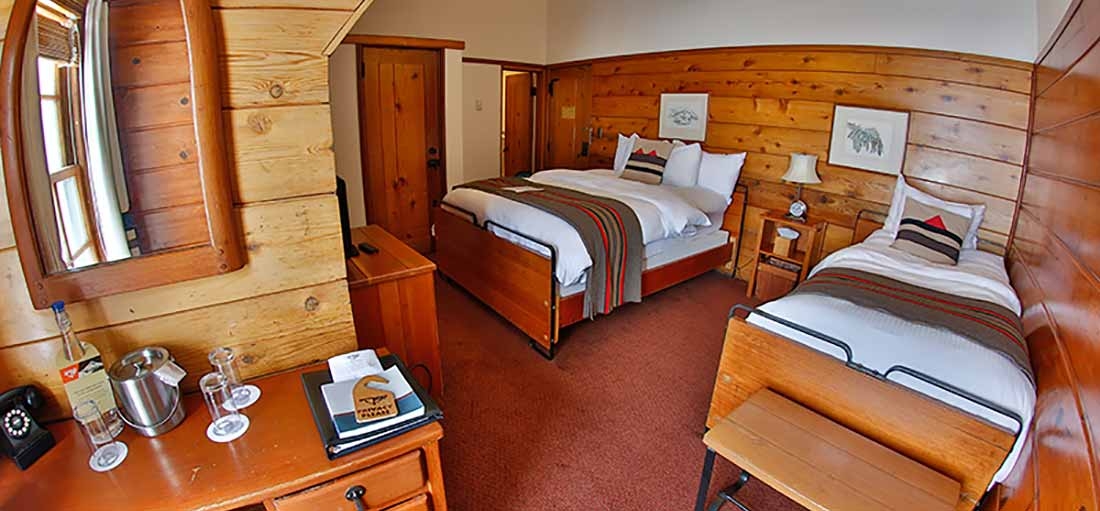
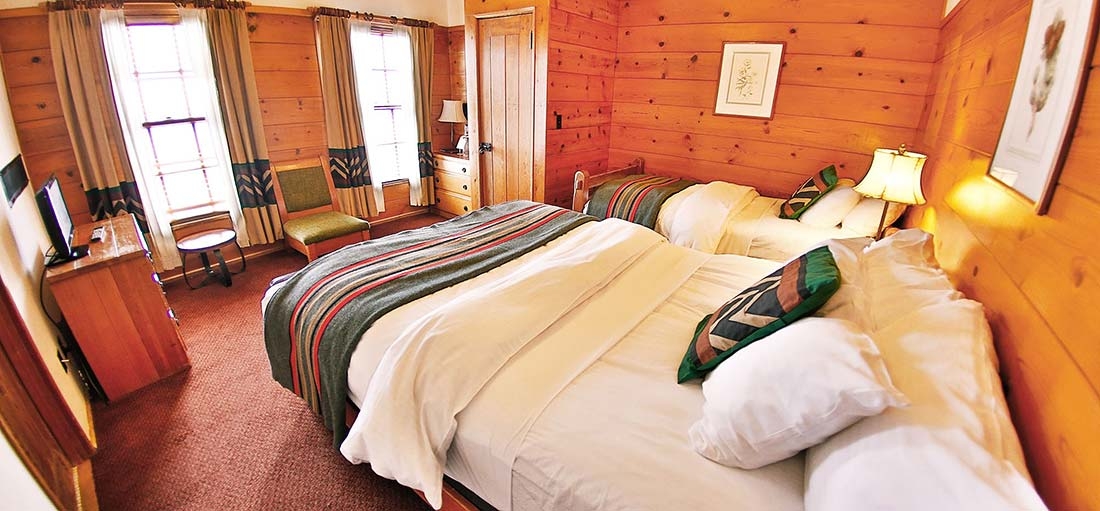
Our cozy queen-twin rooms are perfect accommodations for small families enjoying Mt. Hood recreation. We also have several queen connecting rooms for larger families. Timberline provides a ski keep area for hotel guests in the winter and bike storage in the summer.
FEATURES
- One queen and one twin feather bed or twin rollaway
- Views of Mt. Hood or Mt. Jefferson
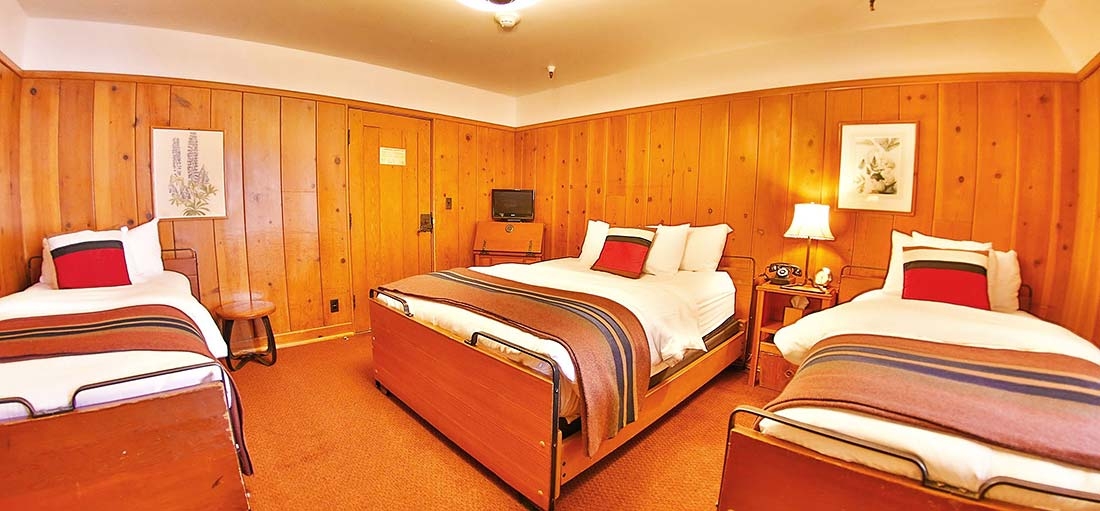
This more spacious version of a Timberline queen room includes two twin beds. Children 12 and under stay for free with an accompanied adult when they occupy the same room. Cribs are available upon request.
FEATURES
- One queen and two twin feather beds
- Located in the east wing with a Mt. Hood view
- This is a dog-friendly room! VIEW OUR PET POLICY
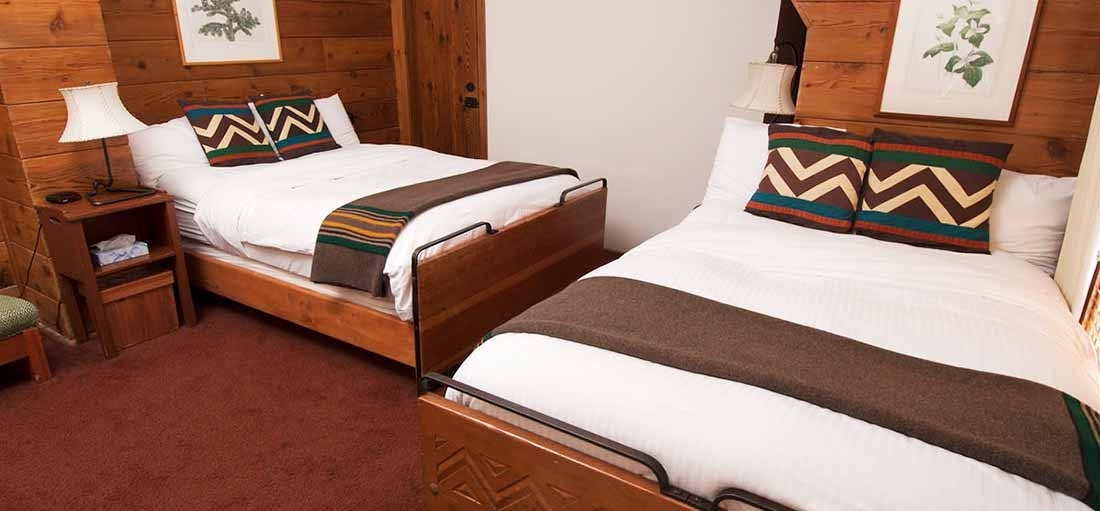
Two of our queen rooms have an additional double bed and a little more space. All of our room rates are based on double occupancy. $30 per night is added to any guest 13 years or older after the first two guests.
FEATURES
- One queen and one double feather bed
- Views of Mt. Hood or Mt. Jefferson
- This is a dog-friendly room! VIEW OUR PET POLICY
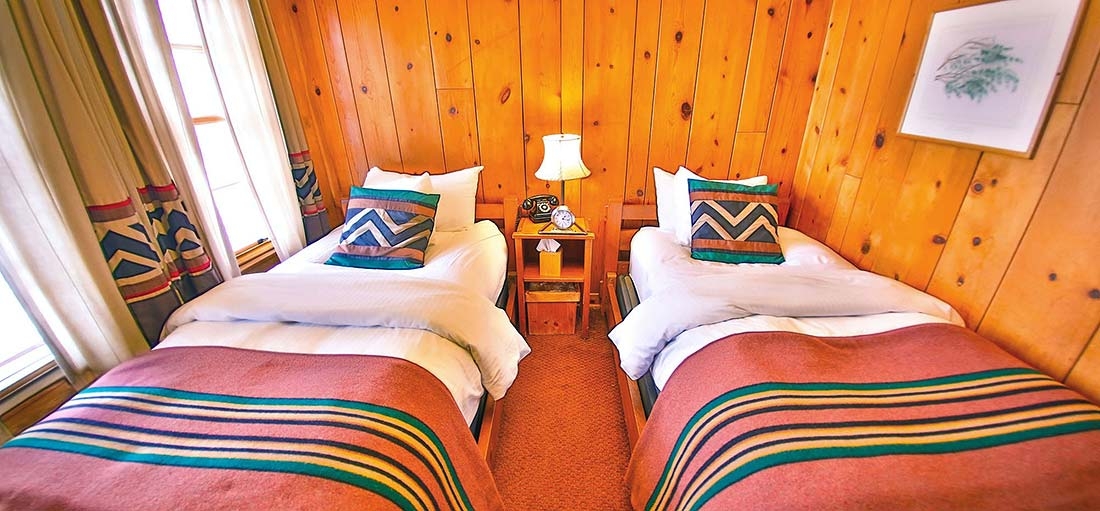
These small but cozy rooms are located on the first floor and second floor east wing, steps from the active Ram’s Head bar. Priced for value, economy twin rooms are a lovely respite for hikers on the Pacific Crest Trail.
FEATURES
- Two twin feather beds
- Views of Mt. Hood or Mt. Jefferson
- This is a dog-friendly room! VIEW OUR PET POLICY
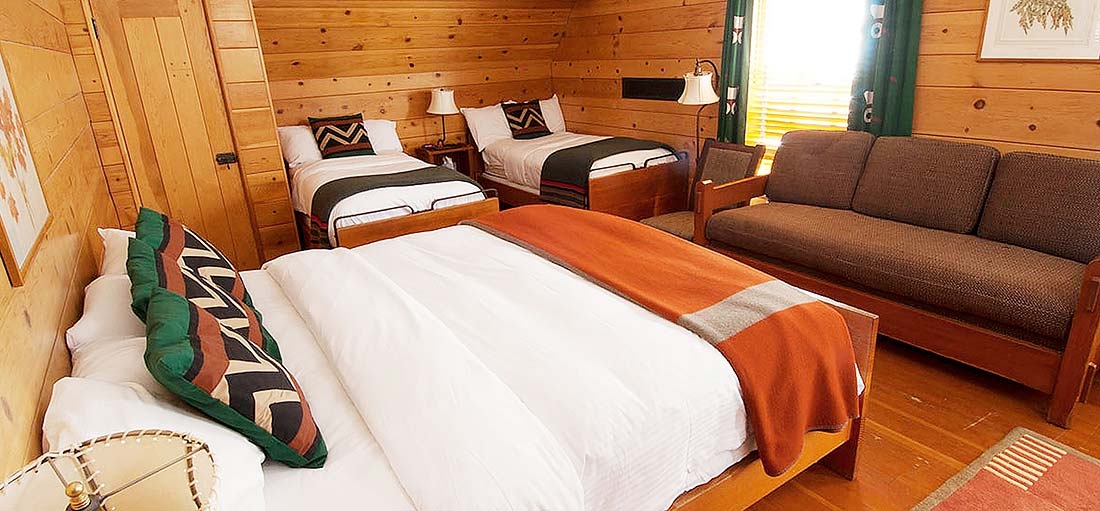
Families love staying in our corner rooms that are near the heated outdoor pool and hot tub. These larger rooms also have a sofa and are located at the end of the first floor hallway for more privacy.
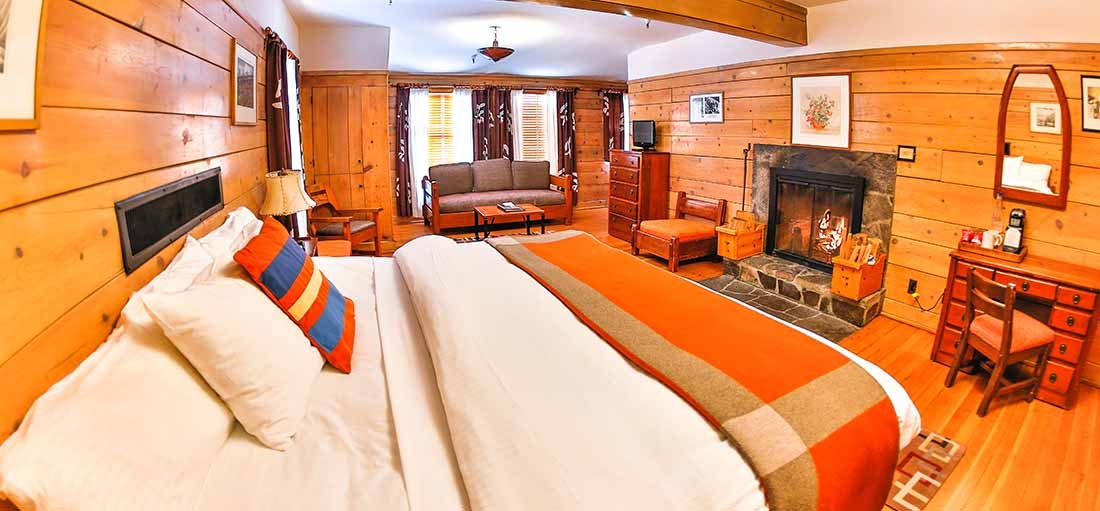
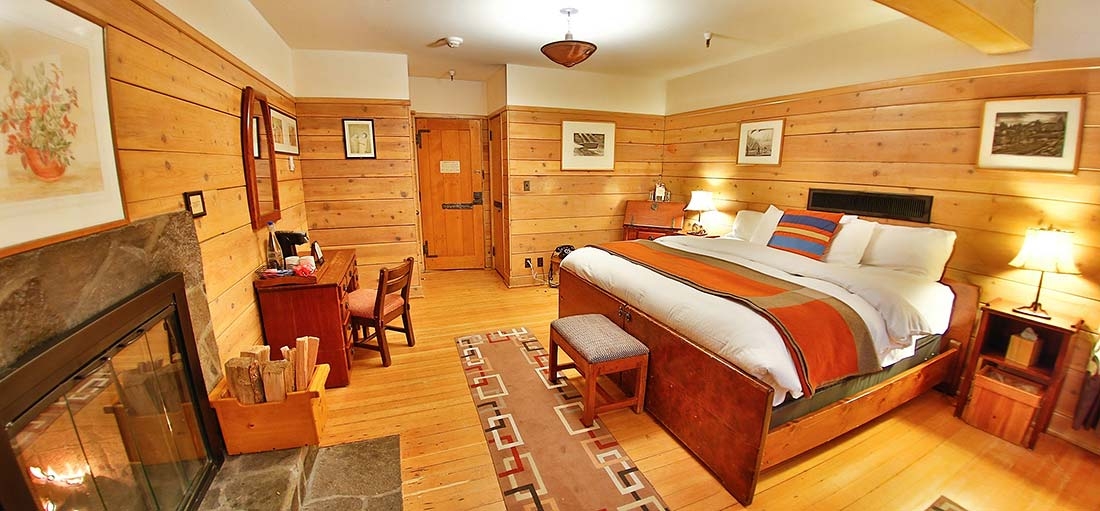
Timberline's premier fireplace rooms offer a truly unique lodge experience. These spacious room feature a sitting area and include the added amenities of a coffee maker, bathrobes, and a real wood-burning fireplace. These romantic rooms are perfect for wedding nights and other special occasions.
FEATURES
- One king feather bed + space for a rollaway twin bed
- Views of Mt. Hood or Mt. Jefferson
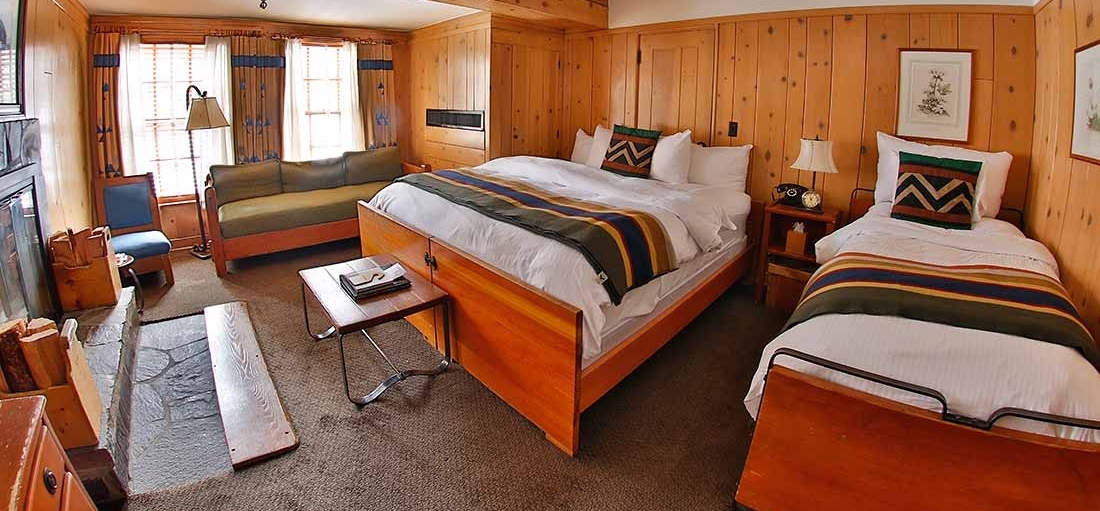
Relax in front of wood-burning fireplace after a day of skiing or snowboarding with your family on Mt. Hood. Our king twin rooms are cozy and warm featuring fluffy bedding, Pendleton blankets, robes to wear to the pool and hot tub, and a coffee maker.
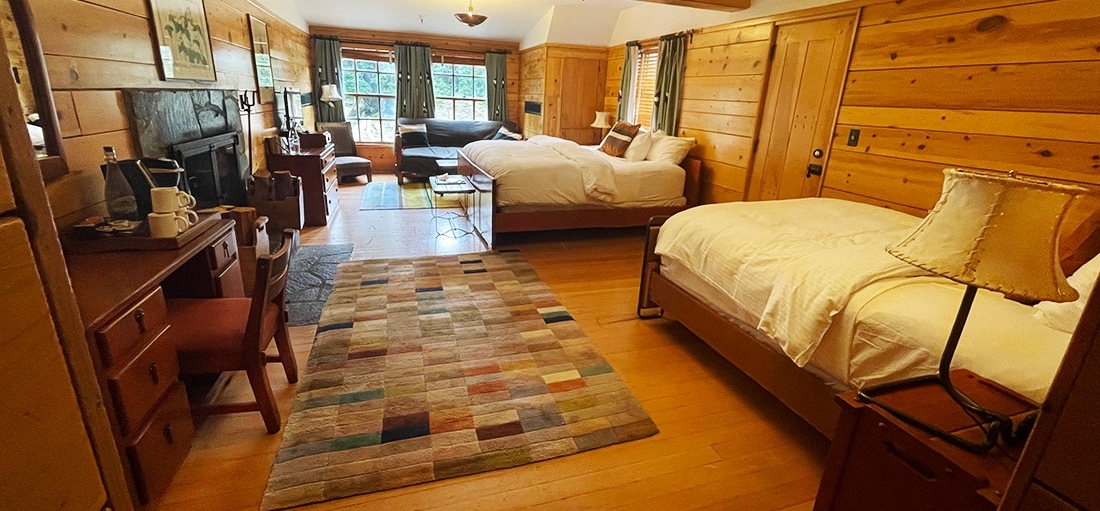
As one of Timberline's ADA accessible hotel rooms, this room has a wide entrance, more space, and an accessible bathroom with a shower bench and stability rail. This room also has the option of connecting to the queen room next door.
FEATURES
- One king and one double feather bed
- Space for a rollaway twin bed
- Views of Mt. Hood or Mt. Jefferson
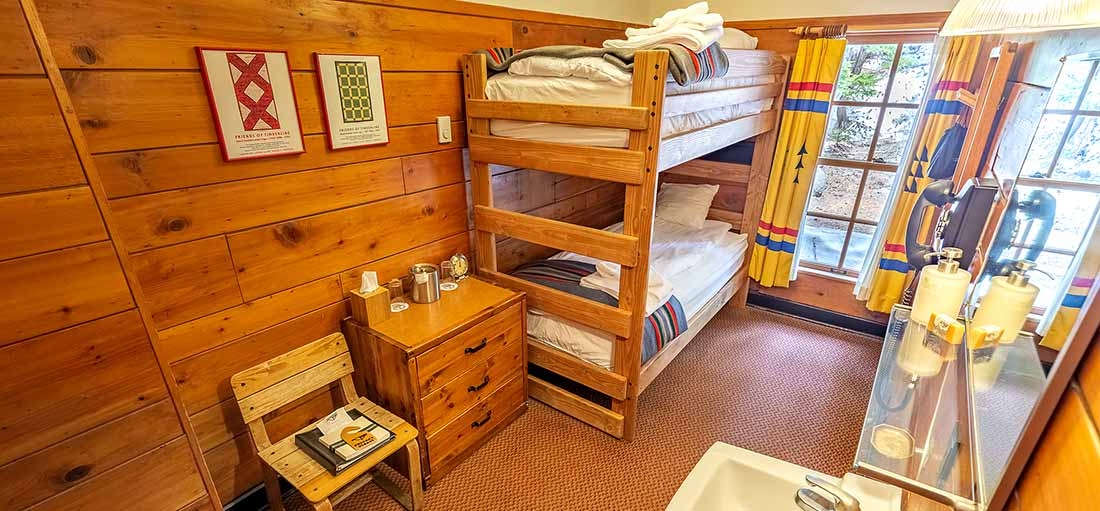
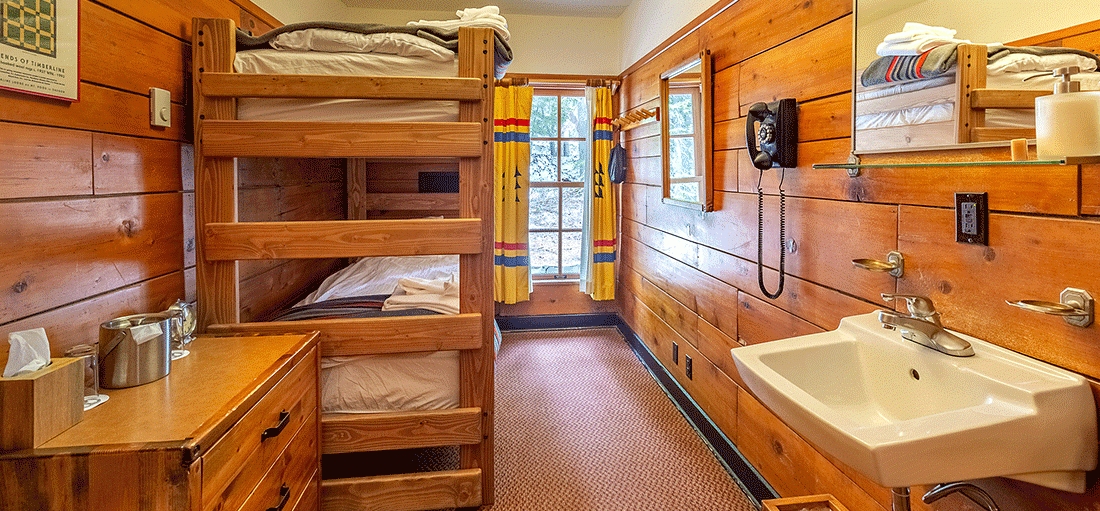
Our European-style bunk rooms provide a fun and authentic alpine experience for those enjoying everything Mt. Hood has to offer. The small chalet rooms are located near the heated outdoor pool, hot tub, and sauna. Chalet rooms have shared access to several private bathrooms with showers and toiletries.
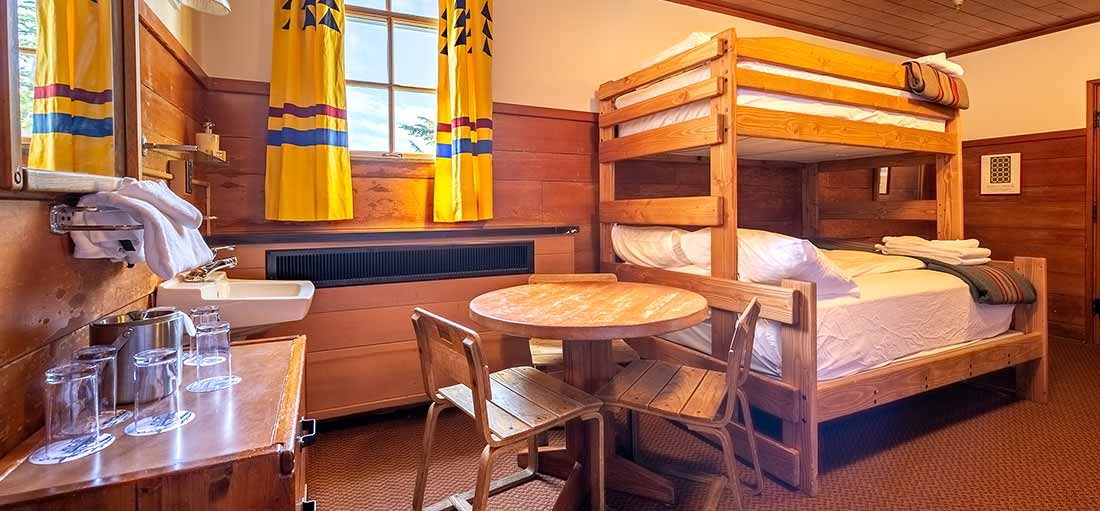
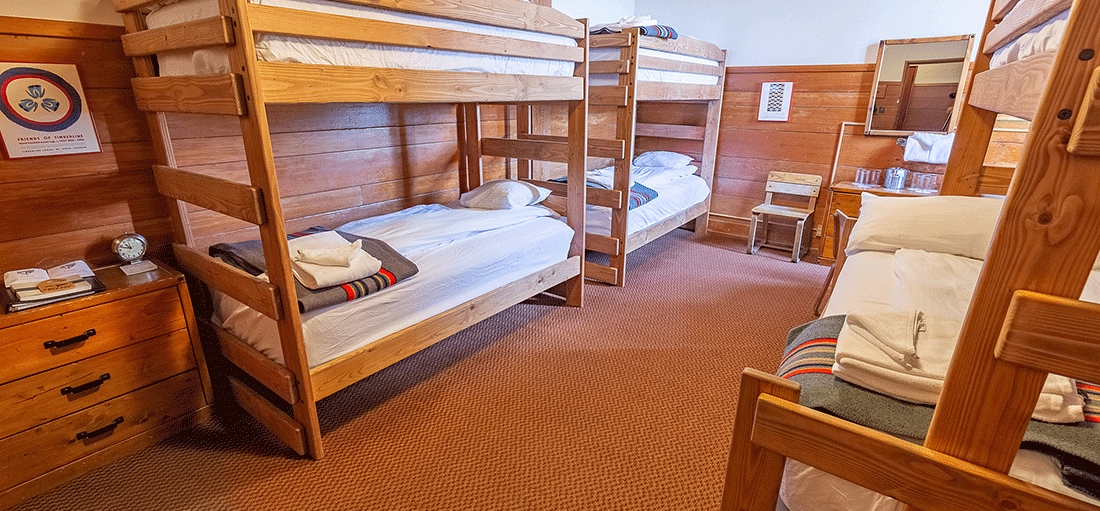
For a fun friends or family ski vacation, stay the night in a medium chalet bunk room. Our European-style bunk rooms have sinks and seating areas, and shared access to several private bathrooms in the hallway.
FEATURES
- Three bunk beds, one with a double on the bottom
- Accommodates seven people
- Views of Mt. Jefferson
- This is a dog-friendly room! VIEW OUR PET POLICY
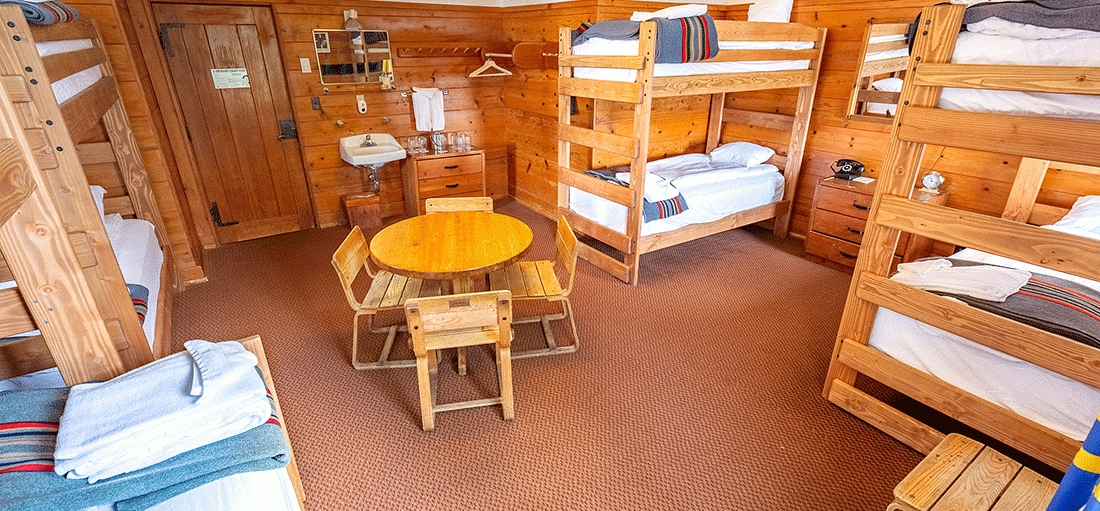
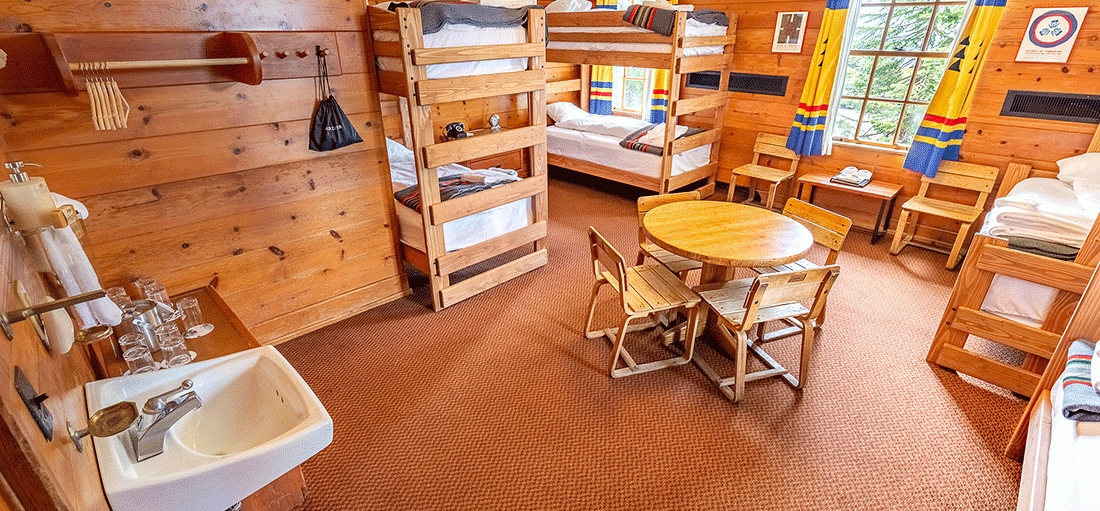
Timberline's one large chalet bunk room faces the Cascades and Mt. Jefferson to the south for glorious sunsets. If your plan is to ski all day with your pals and crash at night, our chalet rooms are a great value.
FEATURES
- Four bunk beds, one with a double on the bottom
- Accommodates nine people
- Views of Mt. Jefferson
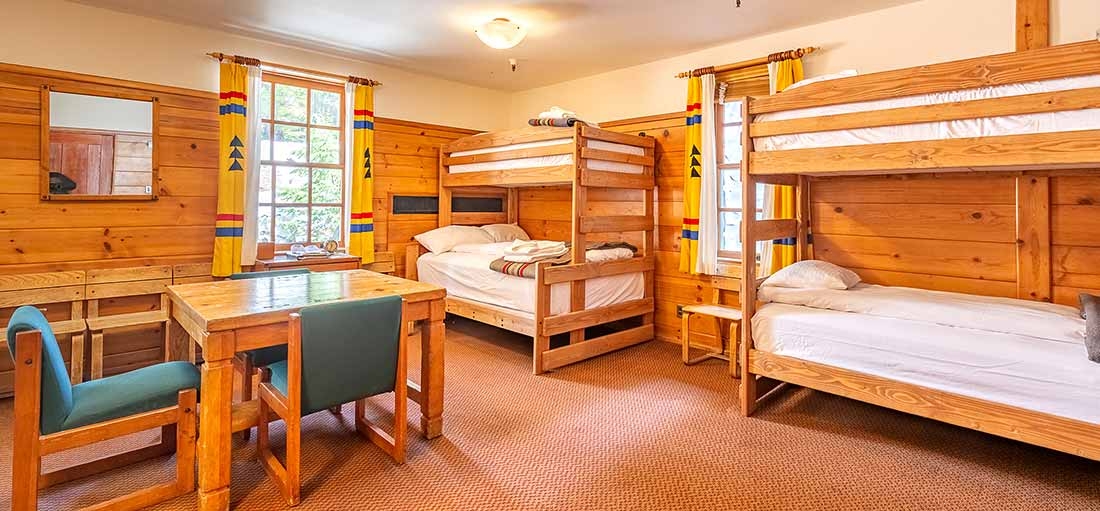
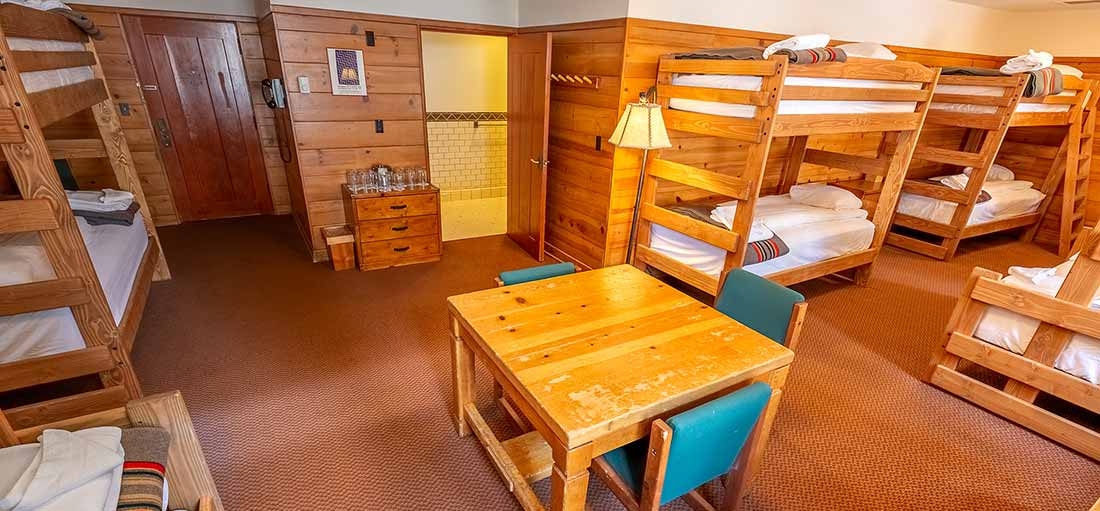
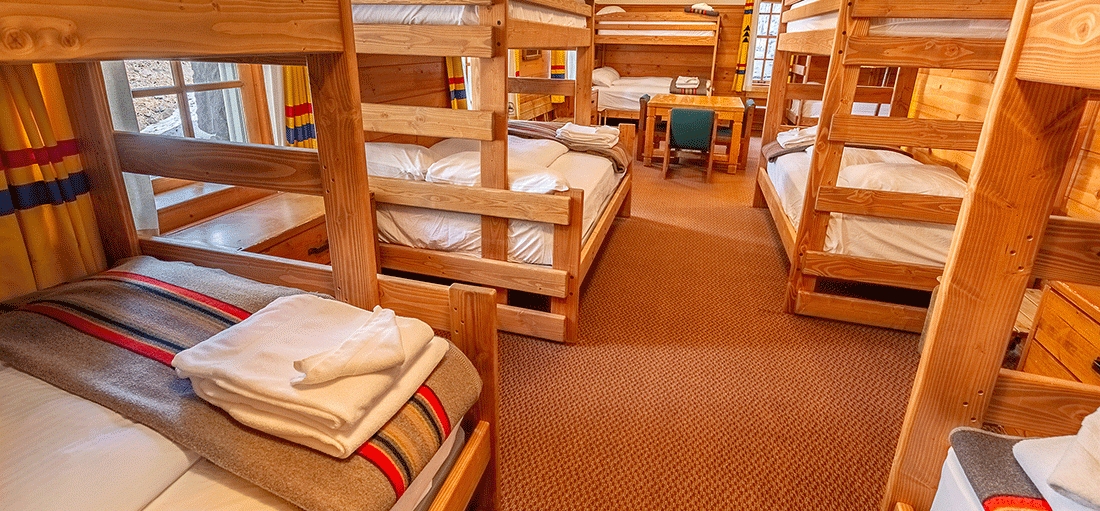
Named for a true champion of an Oregonian, the Mary Gautreaux Room is an extra large chalet room with sleeping arrangements for fifteen people. It is also ADA accessible with its own bathroom.
FEATURES
- Six bunk beds, three with doubles on the bottom
- Accommodates 15 people
- Views of Mt. Hood
Open Menu on the left for more photos and our PartnerList. Open 360 Photos on the right to view all of Timberline Lodge hotel rooms.
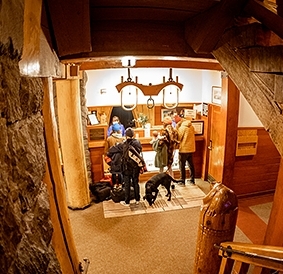
Learn more about hotel check-in and check-out times, lodge hours, our pet policy, accessibility, and Timberline's cancellation policy.


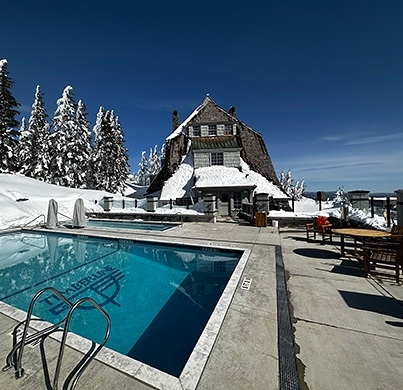
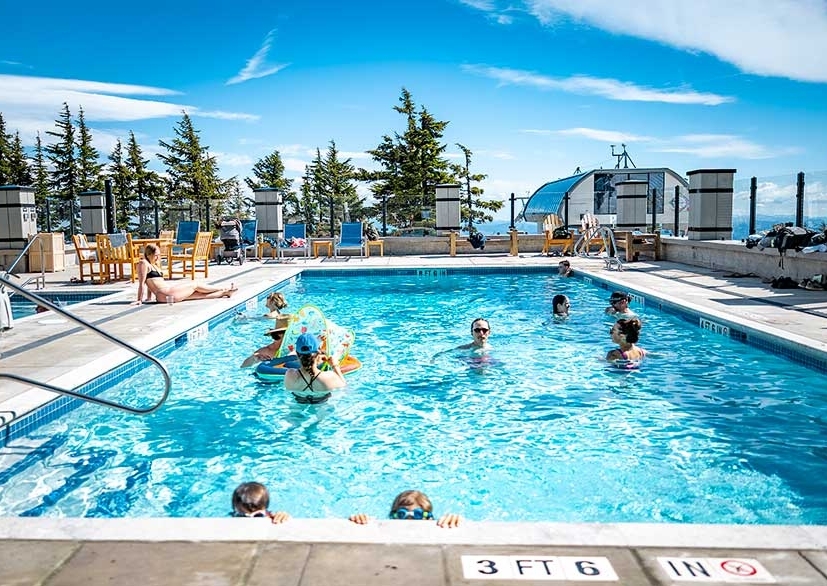
Completed in March 2024, Timberline's heated outdoor pool and hot tub are open to hotel guests. We also have a sauna and fitness room located indoors adjacent to the pool area for hotel guests to use at their leisure.
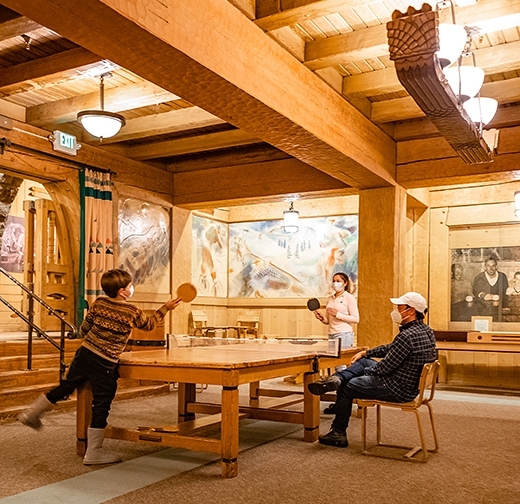
A wide selection of books and family board games are available at the front desk. We also have ping pong and shuffle board available in the Barlow Room. Want to curl up in bed with a good film? DVD players and movies are available for rent at the front desk.
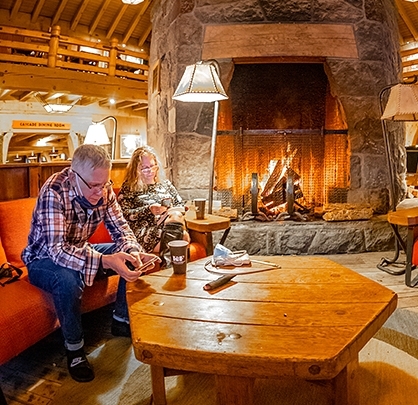
Free wireless internet is available throughout the lodge.